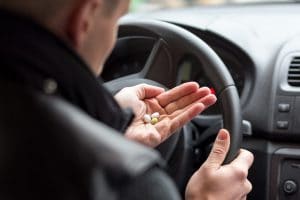
The Facts About Drugged Driving: What Alabama Motorists Need to Know
In 2024, 4,657 traffic accidents were attributed to drunk or drugged driving in the state of Alabama. As a result of those 4,000+ accidents, 187 Alabamians lost their lives – leaving loved ones behind to pick up the pieces.
While many drivers are familiar with the common legal statutes and consequences associated with drunk driving, they may be less well acquainted with the implications of drugged driving under Alabama law. Here’s a high-level overview of some of the most important facts to know about drugged driving and an explanation of how driving while impaired can impact a car accident case in the state of Alabama.
What is drugged driving?
The phrase “drugged driving” refers to the act of operating a motor vehicle while under the influence of illicit substances or certain prescription drugs. While many of us think of driving under the influence as a charge related to alcohol consumption specifically, drugged driving also falls under this umbrella in the context of Alabama law. This means the consequences for operating a vehicle while under the influence of drugs are often just as severe as the consequences for drunk driving.
It might be tempting to assume that drugged driving charges are reserved only for motorists who use illegal substances like marijuana or opioids, but Alabama law allows for drugged driving charges in cases involving certain prescription and over-the-counter (OTC) medications, as well. Bottom line: if a motorist has consumed illicit drugs or medications and is subsequently unable to safely operate their vehicle, they may be charged with a DUI for drugged driving.
Why is drugged driving so dangerous?
Drugged driving can be incredibly dangerous because illicit substances and some medications can seriously impair a driver’s judgment, motor skills, and response times. By design, many illegal drugs change the way we think, feel, and experience the world around us, which affects our ability to safely operate motor vehicles and other types of equipment.
Many prescription and OTC medications have similar effects – either intentionally or unintentionally. When the primary effects or side effects of a legal substance render a driver unable to safely operate a vehicle, the driver may be putting themselves and others at serious risk of harm.
Some of the common impairments associated with the use of certain legal and illegal drugs include:
- Delayed reaction time
- Poor judgment
- Impulsivity
- Challenges with motor coordination
- Vision changes
- Drowsiness or loss of consciousness
- Hallucinations
When multiple substances (i.e., multiple drugs or a combination of drugs and alcohol) are involved, their effects may be amplified, along with the potential for danger. Even though many of us get behind the wheel every single day, it’s important to remember that the average American vehicle weighs over 4,000 pounds and can do serious harm to people and property if not operated by a driver who is in full control of their faculties.
What kinds of drugs can cause drugged driving?
As noted above, drugged driving charges aren’t reserved solely for motorists who are under the influence of illegal substances. On the contrary, prescription drugs often play a role in DUI cases and motor vehicle crashes across the country.
Some examples of drugs – legal and illegal – that may prevent drivers from safely operating a vehicle include:
- Marijuana
- Cocaine
- Methamphetamine
- Opioids like heroin
- Prescription painkillers
- Anxiety medications like benzodiazepines
- Sleeping pills like Ambien
- ADHD stimulants (Adderall, Ritalin, etc.)
- Muscle relaxers
- Cold and allergy medicines
- OTC sleep aids
Even if you take your medications as prescribed, their side effects may render you unable to drive without impairment. This risk may be even more present if you combine your prescription medication with other substances like illegal drugs or alcohol.
You may not even realize how much your judgment or coordination is impaired until it’s too late, so it’s always best to avoid getting behind the wheel after taking medications or other substances known to cause drowsiness or other side effects.
What are the legal consequences for drugged driving?
Alabama law outlines a number of legal consequences for drugged driving, many of which are contingent upon a driver’s existing record. Here’s a quick overview of the legal consequences for drugged driving in the state of Alabama:
First offense
If a driver has not had any other DUI charge for the past 10 years, penalties for drugged driving may include:
- Potential of time in jail
- Fines of $600-$2,100
- 90 days of license suspension
- Possible community service
On a first conviction, if a child under 14 was in the vehicle or someone else was injured, Alabama law requires ignition interlock for one year (and the statute also addresses suspension/restricted licensing mechanics).
Second offense
For a second offense within a 10-year period, the penalties for drugged driving may include:
- Up to one year in jail, with a minimum sentence of 5 days
- Fines of $1,100-$5,100
- License suspension for one year
- Possible community service for at least 30 days
As you can see, the penalties scale up in accordance with the frequency of offense. Repeat offenders face harsher consequences and could find themselves without driving privileges or even in prison for months at a time.
Third offense
A third drugged driving offense is still classified as a misdemeanor under state law, but comes with enhanced penalties, including:
- A minimum of 60 days in prison
- Fines of $2,100-$10,100
- License suspension for three years
While the maximum prison sentence for a third drugged driving offense is still one year, a third-time offender is required to spend at least 60 days in jail. Essentially, a third conviction requires at least 60 days served that cannot be probated or suspended, so if you commit the crime, you should expect to do the time.
Fourth offense and beyond
For a fourth drugged driving conviction (or if the driver has a prior felony DUI on their record), the charges are escalated to a Class C felony punishable by:
- One to 10 years in jail (minimum sentence of one year and one day)
- Fines of $4,100-$10,100
- License suspension for five years
While the state imposes a minimum prison sentence of one year and one day for these charges, offenders are technically only required to spend a minimum of 10 days in the county jail, provided that they enroll in and successfully complete a state-certified chemical dependency program as a condition of their probation. The offender may also be subject to electronic monitoring (house arrest) for the duration of their probation.
Across the board, the potential legal penalties associated with drugged driving are hardly worth the risk. Between hefty fines, license suspension, and potentially lengthy prison sentences, a fleeting high can cost drivers their freedom in more ways than one.
How drugged driving affects car accident claims
Alabama is considered a “fault” state when it comes to assigning liability in car accident claims, which means it’s crucial to establish if and how drugged driving might have played a role in a crash. If you suspect that the other driver involved in your accident was impaired by drugs at the time of the collision, they may be found legally liable for your losses and ordered to compensate you accordingly.
As noted above, drugged drivers often face criminal charges, but they can also be penalized in civil court for their actions. An experienced car accident lawyer can help you collect the evidence and information you need to successfully argue the facts of your case in order to hold the at-fault driver accountable for their actions. While many car accident claims settle out of court, your attorney can also help you secure a favorable case outcome in a civil trial if it comes down to it.
Final thoughts
Drugged driving poses a major threat to the health and safety of Alabama motorists. These accidents can have dire consequences for victims and their families and start a snowball effect of loss, strain, and overwhelm. The good news is that drugged driving is 100% preventable when drivers exercise personal responsibility and concern for the safety of others. Subsequently, when a driver makes the wrong choice and causes harm to unsuspecting victims, they deserve to be held accountable to the fullest extent of Alabama law.
At Martin & Helms, we believe that irresponsible drivers should face the music and take responsibility when they injure members of our community. That’s why we’ve spent the past three decades fighting for Huntsville residents who have been harmed by the negligence or recklessness of others.
If you or someone you know was injured in a drugged driving-related crash, our team might be able to offer you critical support. Give us a call today or fill out our online contact form to schedule a consultation with a member of our team, and let’s discuss your options.
Since 1995, Clay Martin has concentrated his practice on representing individuals and the families of individuals who have been harmed or injured as a result of the wrongful acts of others. If you need reliable legal help, contact Martin & Helms now.